
Selecting premium biomass fuel requires a solid understanding of a standard wood pellet specification. Industrial boilers demand consistent heat output. Inefficient combustion raises overhead operational costs quickly. Reliable fuel quality safeguards heavy machinery and reduces maintenance cycles.
Checking a verified wood pellet specification ensures your facility hits optimal thermal output every time. High-grade wood pellets offer clean energy, low emissions, and reliable combustion stability. Buyers must evaluate standard parameters before committing to large supply contracts.
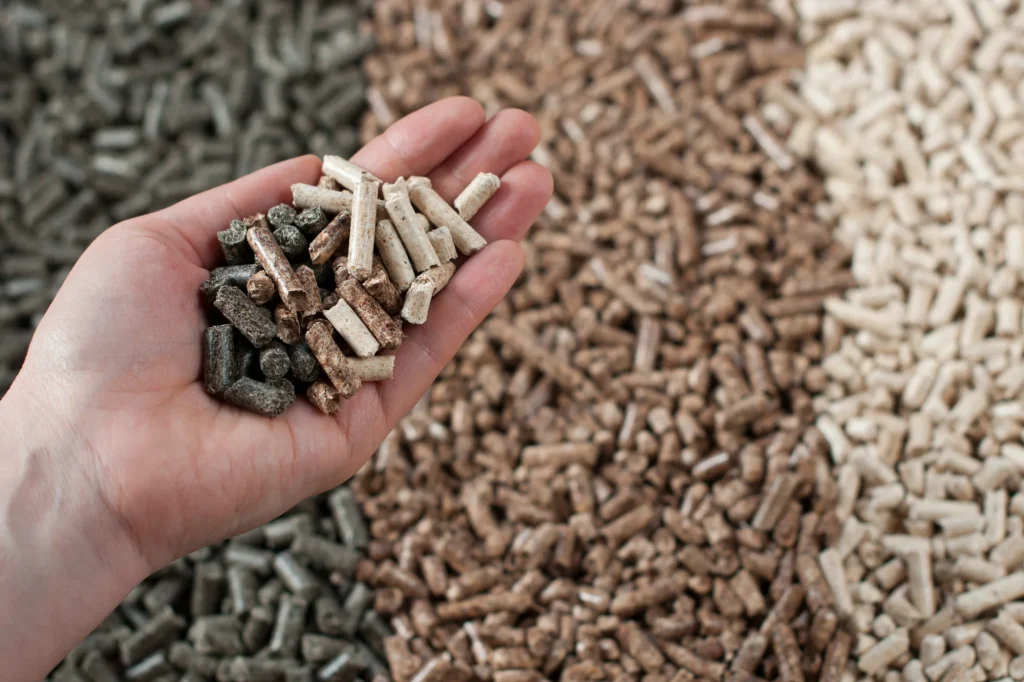
What Defines an Industrial Wood Pellet Specification?
A rigorous wood pellet specification determines fuel performance inside industrial burners. International standards like ENplus classify pellets based on physical and chemical traits. High-grade fuels prevent clinker build-up and slagging inside burner grates.
Standard parameters reflect raw material purity and pressing precision. You can explore various commercial biomass grades in our complete wood pellet product catalog to evaluate commercial grades.
Key parameters in a typical wood pellet specification include:
- Calorific Value: Represents total energy output per kilogram.
- Moisture Content: Lower moisture guarantees cleaner combustion.
- Ash Content: Determines combustion residues and cleaning frequency.
- Mechanical Durability: Measures resistance to crushing during bulk transport.
- Bulk Density: Affects shipping volume, container payload, and silo storage capacity.
Core Technical Parameters in Wood Pellet Specification
Understanding the numbers behind every parameter helps procurement teams avoid sub-par fuels. Here is how core specifications directly influence daily energy output.
1. Calorific Value (Gross and Net)
Calorific value measures heat released during combustion. Premium wood pellets deliver a Net Calorific Value between 16.5 to 19.0 MJ/kg. High energy density cuts fuel tonnage consumption across operations.
2. Moisture Content
Water content drastically reduces operational burning temperature. Quality standards mandate moisture levels strictly below 10%. Excess water causes smoke, incomplete combustion, and lower thermal output.
3. Ash Content and Ash Melting Behavior
Ash represents incombustible inorganic minerals. Standard ENplus A1 demands ash content under 0.7%. Low ash prevents heavy slagging inside high-temperature burner nozzles.
4. Mechanical Durability (DU)
Durability tests reveal how well pellets resist abrasion. A minimum threshold of 97.5% prevents pellet disintegration into dust. Excessive fines raise fire hazards during silo storage.
5. Diameter and Length
Most commercial burners require pellets sized at 6 mm or 8 mm. Length ranges between 3.15 mm and 40 mm. Standard sizing prevents blockages inside automated boiler auger feeders.
Comparing Quality Grades in Wood Pellet Specification
International markets categorize pellets based on purity and target application. Understanding these classes ensures you select the correct fuel for your equipment.
| Parameter | ENplus A1 (Premium) | ENplus A2 (Standard) | ENplus B (Industrial) |
| Diameter | 6 mm / 8 mm | 6 mm / 8 mm | 6 mm / 8 mm |
| Calorific Value | $\ge$ 16.5 MJ/kg | $\ge$ 16.5 MJ/kg | $\ge$ 16.5 MJ/kg |
| Moisture Content | $\le$ 10% | $\le$ 10% | $\le$ 10% |
| Ash Content | $\le$ 0.7% | $\le$ 1.2% | $\le$ 2.0% |
| Mechanical Durability | $\ge$ 98.0% | $\ge$ 97.5% | $\ge$ 96.5% |
| Bulk Density | 600 – 750 kg/m³ | 600 – 750 kg/m³ | 600 – 750 kg/m³ |
How Manufacturing Controls Affect Wood Pellet Specification
Every stage of processing determines the final wood pellet specification. Raw material selection directly impacts ash and calorific parameters. Pure hardwood yields high energy, while bark elevates ash percentages.
Drying systems must stabilize raw sawdust moisture before compression. Proper drying prevents fungal growth and pellet degradation during oceanic shipping. To see precise quality controls in action, read our breakdown of pellet manufacturing from factory to production steps.
High-pressure die extrusion binds wood lignin naturally without chemical binders. Reliable mills test production batches hourly against export standards. Buyers can also compare alternative biomass options through sustainable biomass fuel resources to diversify fuel supply portfolios.
Why Wood Pellet Specification Matters for Procurement
Procuring fuel based solely on price leads to severe equipment breakdowns. Substandard pellets with high sulfur create corrosive sulfuric acid inside exhaust flues. High chlorine triggers rapid heat-exchanger tube fouling.
Consistent pellet quality guarantees predictable steam output for power generation. It simplifies regulatory compliance regarding stack particulate emissions. Verifying certified lab test reports shields facilities from unexpected boiler maintenance shutdowns.
- Lower Maintenance Costs: Clean burning protects grates and boiler tubes.
- Higher Thermal Efficiency: Dry pellets produce instant, stable heat.
- Safe Storage: High mechanical durability minimizes combustible airborne dust.
- Consistent Automation: Uniform dimensions prevent auger jams in feed hoppers.
Insist on accredited laboratory certificates of analysis before dispatching bulk vessels.
Securing a dependable biomass supply requires a supplier that meets strict global standards. Our premium wood pellets provide stable heat, low ash residue, and maximum energy output for industrial plants. Partner with us today to optimize your fuel procurement and elevate your plant efficiency.
Hubungi Kami :
- Phone / WhatsApp: (+62) 819-2939-1980 (Mala)
- Email: sales@arlion.co.id